13th Edition of International Conference on Neurology and Brain Disorders
October 19-21, 2026

Deep Learning and Neural Networks
Deep learning and neural networks stands as a subset of machine learning, drawing inspiration from the structural complexities of the human brain. Its essence lies in neural networks comprising interconnected nodes organized in layers, facilitating the extraction of nuanced patterns from vast datasets. Through iterative training processes, these networks learn to make predictions, refining internal parameters based on input-output examples. Deep learning's impact spans diverse domains such as computer vision, natural language processing, and speech recognition, catalyzing transformative breakthroughs. Convolutional neural networks excel in tasks like image classification and object detection, while recurrent neural networks demonstrate prowess in sequence modeling, including language translation and time series prediction. Fueled by advancements in computational hardware and the availability of massive datasets, the adoption of deep learning has surged. Open-source frameworks like TensorFlow and PyTorch have democratized its application, empowering researchers and practitioners alike. However, challenges persist, encompassing the voracious appetite for labeled data and the interpretability quandary posed by intricate models. Ethical considerations loom large, touching upon issues of fairness, bias mitigation, and security. Nonetheless, ongoing research endeavors endeavor to surmount these obstacles, augmenting deep learning's capabilities. As the field advances, deep learning stands poised to reshape the landscape of artificial intelligence, propelling innovation across sectors and pushing the boundaries of human understanding and ingenuity.
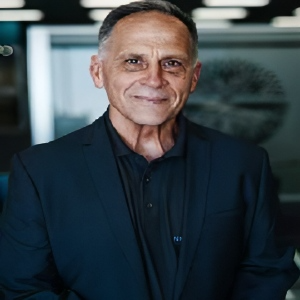
Ken Ware
NeuroPhysics Therapy Institute and Research Centre, Australia
Yong Xiao Wang
Albany Medical College, United States
Joe Sam Robinson
Mercer University, United States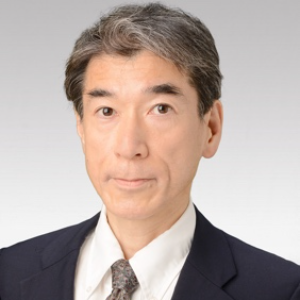
Toru Kondo
Hokkaido University, Japan
Isao Okunishi
Kinjirushi Co., Ltd, Japan
Thomas J Webster
Brown University, United States
Younok Dumortier Shin
OnusBio, United StatesSubmit your abstract Today


Title : Spring break: A true story of hope and determination
Steven Benvenisti, Davis, Saperstein Salomon, PC, United States
Title : The role of compromised cerebrospinal fluid circulation in sleep apnea
Joe Sam Robinson, Mercer University, United States
Title : ADNP regulates cortical development: Mechanism of ADNP syndrome/autism
Kazuhito Toyooka, Drexel University College of Medicine, United States
Title : Nervous system effects in chemicals with immediately dangerous to life or health values
Sudha P Pandalai, National Institute for Occupational Safety and Health, United States
Title : Clinical outcomes of AI-augmented cognitive rehabilitation in dementia and mild cognitive impairment
Esra Al, NewDays, United States
Title : Atypical presentation of Juvenile myoclonic epilepsy in a 16-year-old female: A case report
George Diaz, Memorial Healthcare Systems, United States